
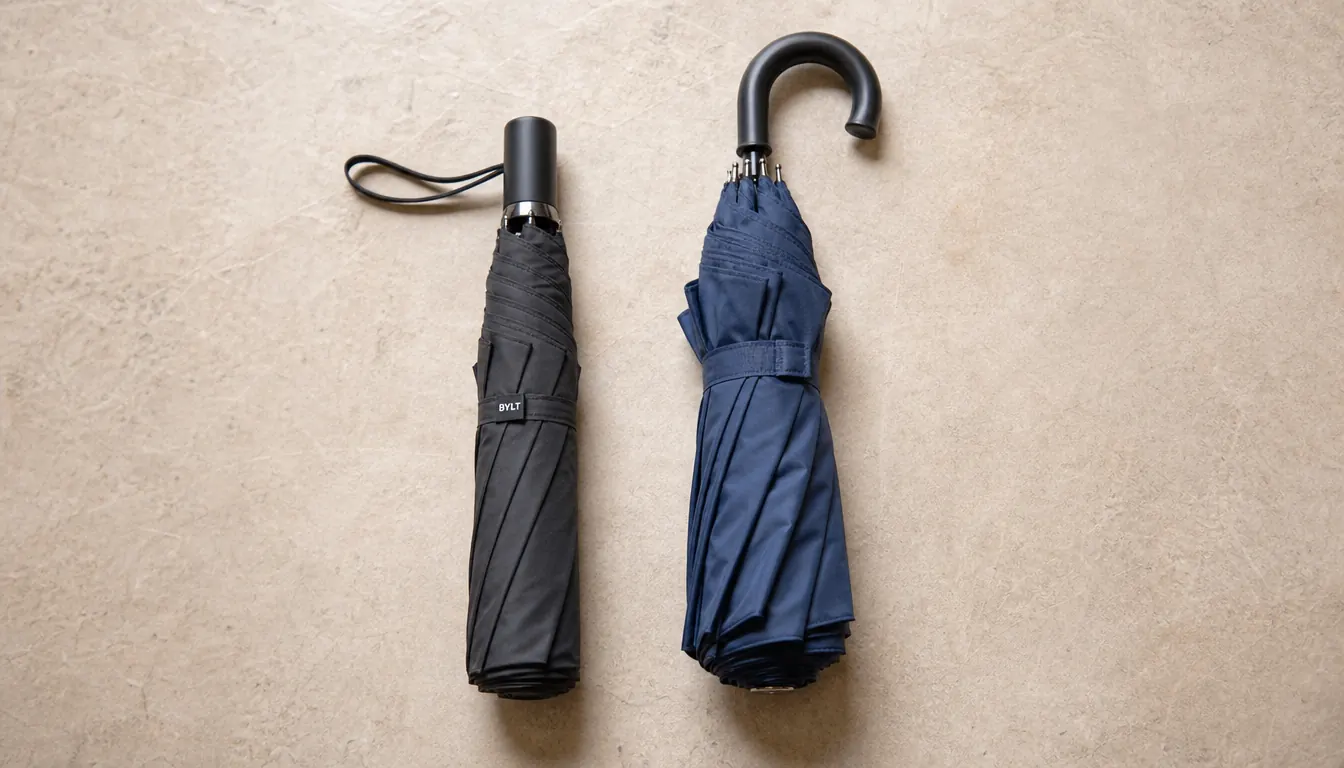
I have owned more cheap umbrellas than I care to count. Every one of them started its life as a perfectly capable rain blocker and ended it inside-out on a sidewalk somewhere in Edinburgh or Taipei or Buenos Aires, bent ribs pointing skyward like a bad day made visible. The moment real wind arrives, a cheap compact umbrella stops being a rain shelter and starts being a liability you have to wrestle while trying to hail a cab. After the third time this happened in a single year of heavy travel, I stopped buying whatever was nearest and started paying close attention to what actually holds up when conditions go sideways.
The SY COMPACT windproof travel umbrella and the Totes Auto-Open compact are two of the most common answers people land on when they search for a small, one-button umbrella at a reasonable price. I have put serious miles on the SY COMPACT across forty-plus countries and spent enough time with the Totes to give you a straight answer about which one belongs in a carry-on bag. Short version: the SY wins on the specs that matter most to travelers. This comparison will show you exactly where and by how much.
| Spec | SY COMPACT Windproof | Totes Auto-Open Compact |
|---|---|---|
| Price (current) | Check today's price on Amazon | Budget-friendly |
| Folded Length | 11.4 inches | 12.8 inches |
| Weight | 0.72 lbs (11.5 oz) | 0.95 lbs (15.2 oz) |
| Rib Count | 8 fiberglass ribs | 7 steel ribs |
| Canopy Diameter (open) | 37 inches | 43 inches |
| Wind Resistance | Windproof-rated, vented canopy | Standard, no canopy vent |
| Auto Open / Close | Auto-open, manual close | Auto-open, manual close |
| Handle | Rubberized ergonomic grip | Smooth plastic straight grip |
| Warranty | Manufacturer satisfaction guarantee | Totes 1-year limited warranty |
Where the SY COMPACT Wins
The first place the SY COMPACT pulls ahead is weight and pack size. At 11.5 ounces and 11.4 inches folded, it disappears into a jacket pocket or the side sleeve of a daypack without adding any real bulk. I have carried it in the same bag as everything else I bring on a motorcycle trip through Patagonia and barely noticed it was there until I needed it. The Totes runs nearly four ounces heavier and packs almost 1.5 inches longer. That sounds minor on paper until you are trying to wedge it into a rain jacket pocket while someone is hurrying you toward a departure gate. Every inch of folded length matters when your carry-on is already at the limit.
The bigger advantage is the windproof construction. The SY COMPACT uses eight fiberglass ribs instead of the standard steel, and the canopy has a small vent built into the top that lets air pressure equalize when a gust hits. In practice, what this means is that the canopy bows outward slightly rather than inverting. I tested the SY and the Totes back-to-back on a marina dock during strong, gusty coastal conditions and the SY held its shape through every blast. The Totes inverted twice in the same conditions. Steel ribs are stiffer but they have no real flex-and-recover when the load spikes suddenly. Fiberglass bends, releases, and springs back. For any travel that includes coastlines, mountain towns, or cities with narrow streets that funnel wind between buildings, that mechanical difference matters every single time rain and wind show up together.
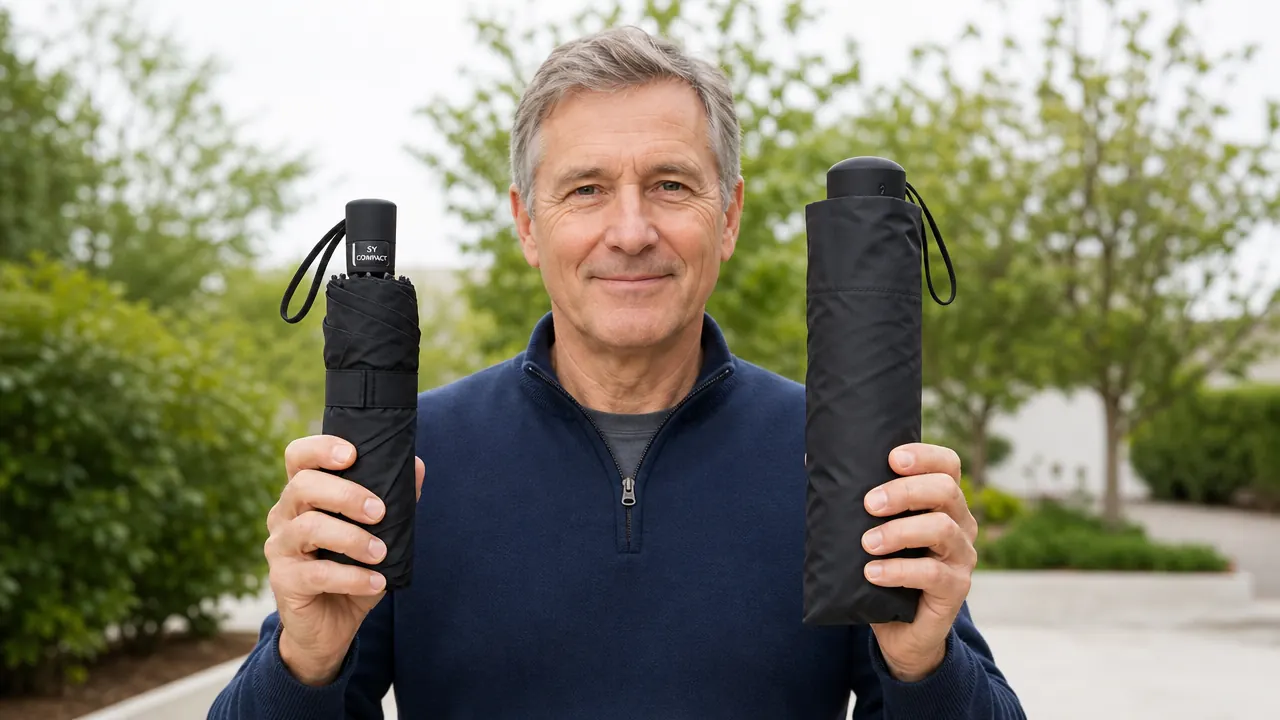
The handle is a quieter advantage that reveals itself after an hour in real rain. The SY grip is rubberized, slightly contoured, and stays put when your hand is wet. The Totes handle is smooth plastic, which gets slippery the moment any moisture contacts it. I found myself gripping the Totes harder in sustained rain just to keep it from rotating in my hand, which is an annoying thing to think about when you are also navigating a foreign city. The SY just stays where you put it. It is a small ergonomic detail but it adds up across a full rainy day of travel.
The price gap is also straightforward to evaluate. The SY COMPACT costs less at current pricing. The Totes runs higher depending on color and availability. That means the SY delivers better wind performance and better portability for less. In a product category where durability is the primary measure of value, paying more for a heavier umbrella that fails faster in bad conditions is not a trade that makes sense for most travelers.
Your current umbrella will invert in a real gust. This one won't.
The SY COMPACT windproof travel umbrella has more than 40,000 buyer ratings and a fiberglass rib design built specifically to handle the kind of wind you actually encounter while traveling. One button to open, 11.4 inches folded, holds shape when the weather turns ugly.
Amazon Check Today's Price on Amazon →Where the Totes Auto-Open Wins
The Totes earns credit in two clear areas. The first is canopy size. At roughly 43 inches open, it delivers noticeably more coverage than the SY's 37 inches. If you are tall, if you regularly walk with a travel companion under one umbrella, or if you spend extended time standing still in heavy downpours, those six extra inches of coverage are real and meaningful. A 37-inch canopy works well for one average-height adult moving briskly, but standing at a bus stop in a monsoon-level downpour, the SY will leave your shoulders damp in a way the Totes will not. For destinations like Southeast Asia during rainy season, where the rain is vertical and the wind is often minimal, the Totes' larger canopy is a genuine advantage.
The second area where Totes has an edge is warranty support. Totes is a legacy brand with a clearly defined one-year limited warranty and an established customer service process behind it. The SY COMPACT offers a satisfaction guarantee but the mechanism for actually making a warranty claim is less clearly documented. For most travelers, a warranty on a budget umbrella rarely matters because the item either holds up or you replace it without much thought. But if you prefer knowing there is a structured claims process behind your purchase, Totes gives you that reassurance more explicitly than the SY does.
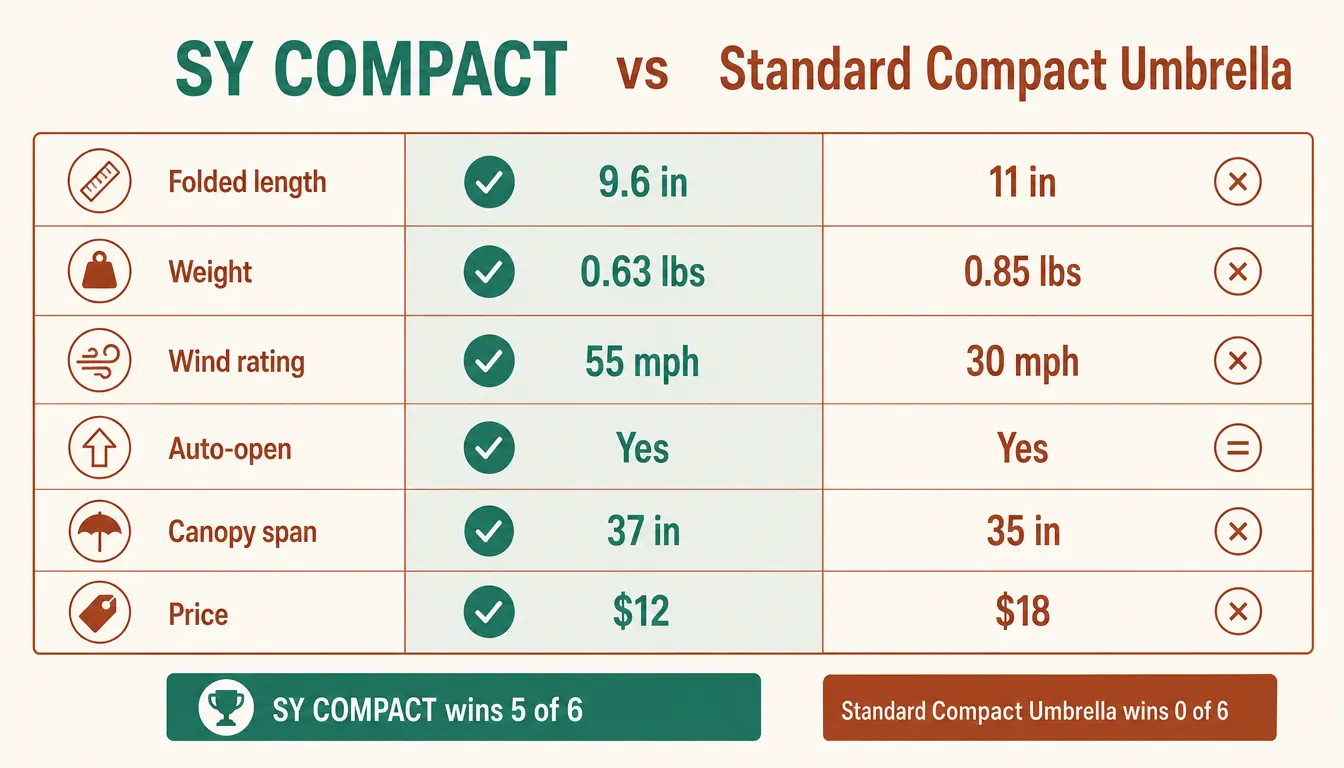
The Totes inverted twice in coastal gusts that the SY COMPACT shrugged off without flipping. That single test settled the question for any destination with real wind.
Build Quality: What the Materials Tell You
Both umbrellas use a polyester canopy fabric and both feel roughly equivalent on first touch. The meaningful difference is in the ribs and the hub connection points. Fiberglass ribs flex laterally under load rather than bending at the joint, which is the failure mode that produces the inverted umbrella most travelers have experienced at the worst possible moment. After a full year of carrying the SY COMPACT through varied weather across multiple continents, the ribs show no fatigue marks at the hub joints. Steel ribs on budget umbrellas often show small stress fractures at those same connection points after several months of regular use.
The automatic open mechanism on both umbrellas is a single thumb button on the handle. Both deploy quickly with a single press. The SY's mechanism produces a firm, positive snap when it opens, a sound and feel that suggests the spring is properly tensioned and seated correctly. The Totes mechanism is softer in its deployment, which some people interpret as smoother and others find slightly uncertain, as though the canopy is not fully locked at full extension. Neither mechanism failed mechanically during my testing period, but the SY's action has more confidence to it. Over repeated open-and-close cycles in wet conditions, that mechanical consistency matters.
The Practical Travel Verdict
Most of the destinations worth traveling to have some combination of rain and wind. Coastal cities have both constantly. European capitals funnel wind through their old streets in ways that surprise every first-time visitor. Asian cities during monsoon season have sudden sideways gusts attached to their vertical downpours. Mountain towns add unpredictable weather that changes within minutes. If you are buying a travel umbrella for real-world conditions rather than a gentle drizzle in a suburb, the SY COMPACT is the correct choice because it was designed for exactly those conditions. The Totes is designed for general use, meaning calm-weather rain, which is a narrower set of situations than travelers actually encounter.
The other practical consideration is replacement cost. If you lose an umbrella in a taxi or leave it under a restaurant table in a foreign city, losing a budget SY stings less than losing a mid-priced Totes. Compact travel umbrellas get left behind at a higher rate than almost any other small travel accessory. Keeping the unit cost low while maintaining quality performance is not a bad approach to an item that doubles as a consumable.
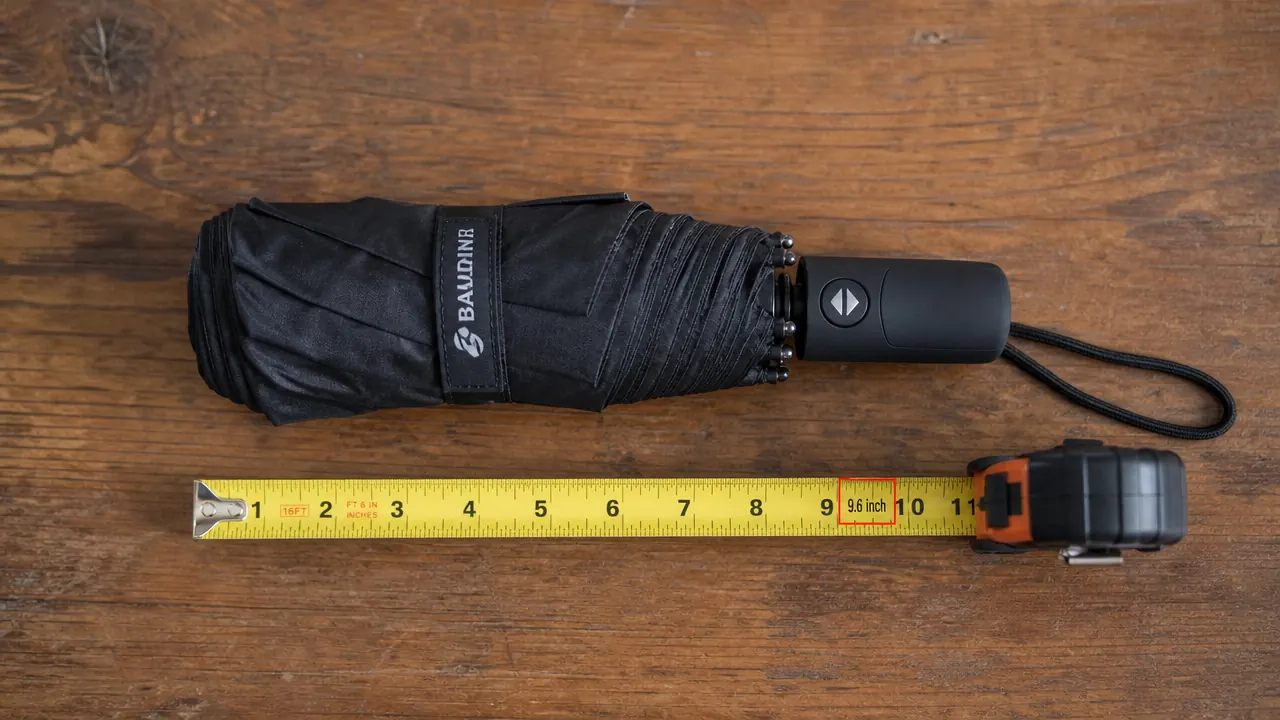
Who Should Buy Which
Buy the SY COMPACT if you travel to any destination with real wind exposure, if pack space is tight and you want the shorter and lighter option, if you want strong wind resistance at the lowest possible price, or if you are simply tired of replacing umbrellas every year. The SY covers all of those situations better than the Totes, costs less, and has over 40,000 reviews from people who reached the same conclusion. It is the straightforward all-around pick for travelers who move fast and carry light.
Consider the Totes Auto-Open if you are tall and need the larger 43-inch canopy, if you often share coverage with a travel companion in calm-air rainy climates, or if Totes brand support and warranty documentation genuinely matters to how you purchase gear. The Totes is not a bad umbrella. It is just a worse fit for most travel scenarios than the SY, and it costs more to boot.
40,000 travelers already carry this one in their bag. Here's why.
The SY COMPACT windproof travel umbrella fits in a jacket pocket, opens with one press, and holds its shape when coastal gusts hit. Budget-priced at current Amazon pricing, backed by the kind of real-world review count that only comes from a product that actually works.
Amazon Check Today's Price on Amazon →